Growth Mindset Tools 7 Powerful Questions to Ask Before You Give Up
Growth is rarely about having everything figured out from the beginning. It is about learning how to respond when things become difficult, confusing, or discouraging. A growth mindset helps you see challenges as opportunities to learn rather than signs that you should stop trying.
The moment you feel like giving up is often the moment when reflection becomes the most valuable tool. By asking yourself better questions, you can shift your thoughts from frustration and self-doubt toward action, improvement, and progress.
This guide explores powerful growth mindset questions that can help you rethink obstacles, build resilience, and continue moving forward even when your goals feel challenging. Whether you are working on personal development, learning a new skill, building confidence, or pursuing a long-term goal, these mindset tools can help you create a healthier approach to challenges.
Key Takeaways
- Small actions can create momentum when motivation feels low.
- Challenges often reveal areas where growth and learning are possible.
- Self-reflection questions can transform negative thoughts into productive choices.
- Progress comes from consistent effort, practice, and adapting your approach.
- A growth mindset focuses on improvement instead of perfection.
What Is a Growth Mindset and Why Does It Matter?
A growth mindset is the belief that your abilities, skills, and intelligence can develop through effort, learning, practice, and persistence. Instead of thinking, “I cannot do this,” a growth mindset encourages you to ask, “What can I learn from this experience?”
This way of thinking changes how you approach failure. A mistake is no longer proof that you are not capable. Instead, it becomes feedback that helps you improve your strategy and make better decisions in the future.
Important: A difficult moment is information, not a final verdict. When something feels impossible, it is often a signal to adjust your approach, gain new skills, ask for support, or take a smaller step forward.
Developing a growth mindset does not mean ignoring frustration or pretending challenges are easy. It means learning how to respond to those moments with curiosity instead of giving up.
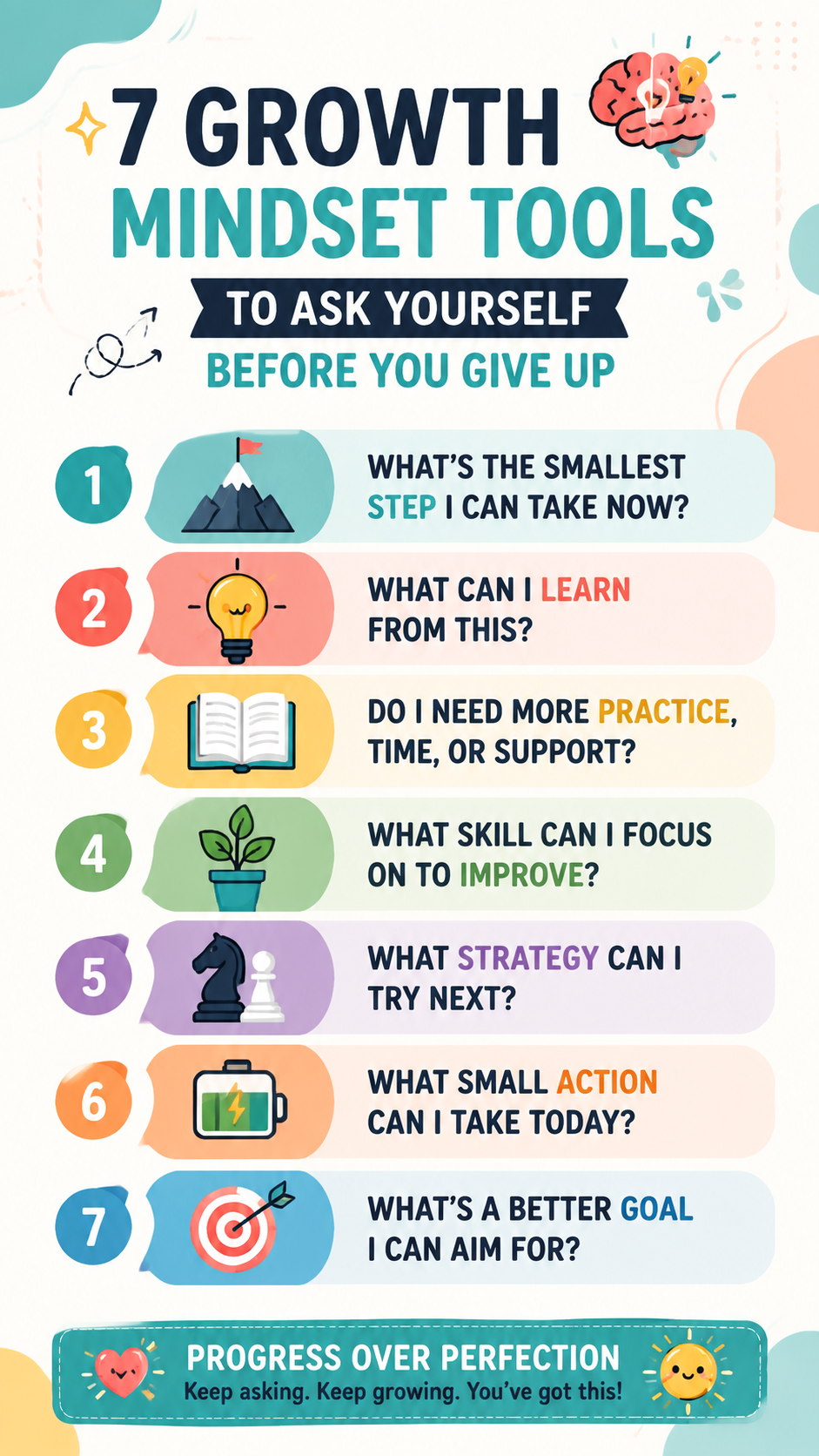
7 Growth Mindset Questions to Ask Before You Quit
When your brain tells you to stop, the right question can create a new path forward. These reflection prompts are designed to help you pause, understand the obstacle, and find a practical next step.
1. What Is the Smallest Step I Can Finish in Five Minutes?
When a goal feels overwhelming, your mind often focuses on the entire challenge instead of the next action. Breaking a big task into a tiny step can make progress feel possible again.
A five-minute action might include opening a document, writing one sentence, practicing one skill, organizing one small area, or researching one simple idea. Small wins build confidence and create momentum.
2. What Is This Attempt Teaching Me to Change?
Repeated mistakes can feel discouraging, but they often contain useful information. Instead of asking why something went wrong, ask what adjustment could improve your next attempt.
Growth comes from learning patterns. Maybe you need a different method, more preparation, additional practice, or a clearer plan. Every attempt provides feedback.
3. Do I Need More Knowledge, Practice, Time, Energy, or Support?
Sometimes quitting feels like the only option because you are missing a resource. Before deciding that you cannot succeed, identify what would make the process easier.
- Do you need to learn a new skill?
- Would more practice improve your confidence?
- Could someone provide guidance or encouragement?
- Do you need rest before trying again?
Recognizing what you need allows you to solve the real problem instead of judging yourself.
4. Which Specific Skill Can I Improve Instead of Judging Myself?
Self-criticism often focuses on identity. Thoughts like “I am not good enough” make challenges feel personal. A growth mindset shifts attention toward skills that can be developed.
Instead of saying, “I am bad at this,” try asking, “Which part of this skill needs improvement?” This creates a practical path forward.
5. What Useful Strategy Can I Learn From Someone Further Along?
Comparing yourself to others can create frustration, but learning from others can accelerate growth. People who have already achieved something often have strategies, habits, or lessons that can help you improve.
Look for inspiration instead of comparison. Ask what methods, routines, or approaches you can adapt for your own journey.
6. What Action Is Small Enough to Begin Before Motivation Arrives?
Many people wait until they feel motivated before taking action. However, motivation often appears after you begin. A small action can create the energy needed to continue.
Pro Tip: Do not wait for the perfect moment to start. Choose an easy first step and let progress create motivation naturally.
7. Do I Need Rest, Help, a Smaller Goal, or a Better Strategy?
Wanting to quit does not always mean you should stop. Sometimes it means your current approach needs adjustment.
Rest can restore energy. Support can provide new ideas. A smaller goal can rebuild confidence. A better strategy can remove unnecessary obstacles. Learning to identify what you need is a valuable growth mindset skill.
Why This Matters
The questions you ask yourself shape the actions you take. A fixed mindset searches for reasons to stop, while a growth mindset searches for ways to improve. Changing your inner conversation can change your response to challenges.
How to Build a Stronger Growth Mindset Every Day
Building a growth mindset is a practice. It develops through repeated choices and small habits that encourage learning and resilience.
Replace Negative Statements With Learning Questions
Notice when you use limiting language. Replace statements like “I cannot do this” with questions such as “What could help me improve?” or “What should I try differently?”
Celebrate Progress, Not Just Results
Growth happens through effort, consistency, and learning. Recognize small improvements instead of waiting only for major achievements.
Reflect After Challenges
After a difficult experience, take time to ask what worked, what did not, and what you can improve next time. Reflection turns experiences into lessons.
At a Glance
- Focus on the next small step.
- Use challenges as learning opportunities.
- Improve skills instead of judging yourself.
- Adjust your strategy when needed.
- Keep moving forward with patience.
Conclusion: Keep Growing One Step at a Time
Everyone experiences moments when progress feels difficult. The difference between staying stuck and moving forward often comes down to the questions you ask yourself.
Growth mindset tools help you replace defeat with curiosity. Instead of seeing obstacles as proof that you should quit, you can view them as opportunities to learn, adjust, and become stronger.
The next time you feel like giving up, pause and ask what small action, lesson, or change could help you continue. Growth does not happen overnight, but every thoughtful step moves you closer to your goals.
Tags
Growth Mindset
Personal Growth
Self Improvement
Mindset Tools
Motivation
Goal Setting
Resilience