8 Easy Homemade Seasoning Blends to Make Your Meals More Flavorful
Homemade seasoning blends are an easy way to bring bold flavor to everyday meals without relying on store-bought spice packets. With a few pantry staples, you can create delicious combinations for tacos, grilled meats, roasted vegetables, chicken, burgers, and more. Making your own spice mixes also gives you complete control over the ingredients, allowing you to adjust the salt, heat, herbs, and seasonings to suit your taste.
From smoky barbecue rubs to fragrant Italian herbs and creamy ranch seasoning, these eight homemade seasoning blends offer something for almost every cooking style. Prepare them in small batches, store them in airtight jars, and keep your favorite flavors within easy reach whenever you cook.
Key Takeaways
- Make eight versatile homemade seasoning blends using common dried herbs and spices.
- Customize each mixture to control salt, sweetness, spice, and overall flavor.
- Use taco, Cajun, barbecue, and burger seasonings to add flavor to savory dishes.
- Prepare garlic herb, Italian herb, lemon pepper, and ranch blends for everyday meals.
- Store dry seasonings in clean, airtight containers away from heat, light, and moisture.
- Label jars clearly so you can quickly find the right seasoning while cooking.
Why Make Homemade Seasoning Blends?
Creating your own spice blends is one of the simplest ways to make home cooking more enjoyable. Instead of opening several containers every time you prepare dinner, you can reach for one ready-made mixture that combines complementary flavors.
Homemade seasonings are also easy to personalize. If you enjoy smoky flavors, add more smoked paprika. If you prefer a little heat, increase the cayenne pepper or chili powder. If you are watching your sodium intake, reduce or omit added salt and season the finished dish to taste.
Another advantage is ingredient awareness. When you prepare seasoning mixes yourself, you know exactly what goes into each jar. You can avoid ingredients you do not want and make smaller batches that suit your household’s needs.
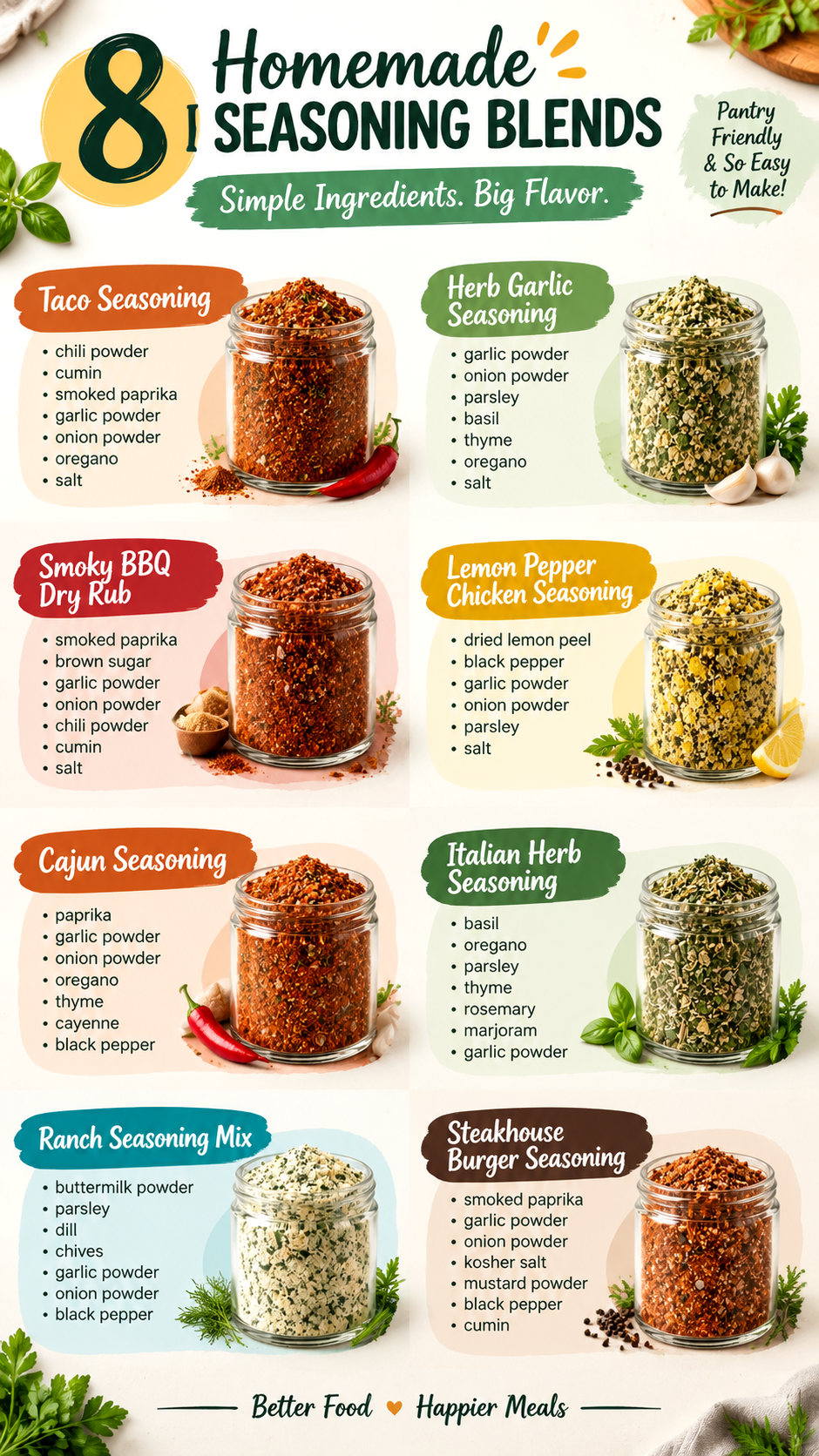
Important: The ingredient lists in this guide provide practical starting points rather than exact measurements from the inspiration graphic. The ratios are flexible, so taste preferences and recipe requirements should guide your final blend.
1. Homemade Taco Seasoning
Taco seasoning is a pantry essential for anyone who enjoys Mexican-inspired meals. Its combination of chili powder, cumin, paprika, garlic, and onion creates a warm, savory flavor that works beautifully with ground beef, chicken, beans, and roasted vegetables.
Ingredients
- 2 tablespoons chili powder
- 1 tablespoon ground cumin
- 1 tablespoon smoked paprika
- 2 teaspoons garlic powder
- 2 teaspoons onion powder
- 1 teaspoon dried oregano
- 1 teaspoon salt, or to taste
- Optional: 1/2 teaspoon cayenne pepper for extra heat
How to Use Taco Seasoning
Stir the ingredients together until evenly combined. Add approximately 1 to 2 tablespoons of the blend per pound of ground meat, adjusting according to taste. For a juicy filling, add a small splash of water or broth while the mixture simmers.
This homemade taco spice mix is also delicious in burrito bowls, quesadillas, roasted chickpeas, fajita vegetables, and homemade taco salads. Sprinkle a little over potatoes before roasting for an easy side dish with a smoky, savory kick.
2. Garlic Herb All-Purpose Seasoning
Garlic herb seasoning is a versatile blend that belongs in almost every kitchen. Garlic powder provides a savory foundation, while parsley, basil, thyme, and oregano add a fresh, aromatic character.
Ingredients
- 2 tablespoons garlic powder
- 1 tablespoon onion powder
- 2 tablespoons dried parsley
- 1 tablespoon dried basil
- 1 tablespoon dried thyme
- 1 tablespoon dried oregano
- 1 teaspoon salt, or to taste
Best Ways to Use It
Sprinkle garlic herb seasoning over roasted potatoes, steamed vegetables, chicken breasts, fish, or homemade croutons. It also makes a flavorful addition to soups, pasta sauces, salad dressings, and marinades.
For a quick garlic herb butter, combine softened butter with a small amount of the seasoning and mix well. Spread it over bread before toasting, melt it over grilled vegetables, or use it to finish baked potatoes.
3. Smoky BBQ Dry Rub
A homemade smoky BBQ dry rub adds rich color and sweet, savory flavor to grilled or oven-roasted foods. Smoked paprika delivers the signature smoky note, brown sugar adds sweetness, and chili powder, cumin, garlic, and onion create a balanced base.
Ingredients
- 2 tablespoons smoked paprika
- 2 tablespoons brown sugar
- 1 tablespoon garlic powder
- 1 tablespoon onion powder
- 1 tablespoon chili powder
- 1 teaspoon ground cumin
- 1 teaspoon salt
- 1/2 teaspoon black pepper
How to Make BBQ Rub Work for You
Mix all ingredients thoroughly, breaking up any clumps of brown sugar. Pat your meat dry, then rub the seasoning over the surface before cooking. Allow it to sit briefly so the flavors can begin to develop.
This dry rub is ideal for chicken thighs, pork chops, ribs, burgers, and roasted vegetables. It can also transform oven-baked potato wedges into a smoky side dish.
Pro Tip: Brown sugar can darken or burn over very high heat. When grilling with a sugary rub, monitor the food carefully and adjust the heat as needed to develop flavor without scorching the surface.
4. Lemon Pepper Chicken Seasoning
Lemon pepper seasoning combines bright citrus notes with the sharp, aromatic taste of black pepper. Garlic and onion powder add depth, while parsley contributes an herbal finish. It is an excellent choice when you want a lighter, zesty alternative to heavier spice blends.
Ingredients
- 2 tablespoons dried lemon peel or culinary lemon zest that has been thoroughly dried
- 1 tablespoon coarsely ground black pepper
- 1 tablespoon garlic powder
- 1 tablespoon onion powder
- 1 tablespoon dried parsley
- 1 teaspoon salt, or to taste
Serving Ideas
Use lemon pepper seasoning on chicken breasts, chicken wings, baked fish, shrimp, roasted asparagus, or steamed broccoli. It also works well with rice dishes and simple pasta recipes.
For an easy dinner, coat chicken with a little olive oil and sprinkle the seasoning evenly over both sides. Roast or bake until the chicken reaches a safe internal temperature of 165°F (74°C). Finish with fresh lemon juice if you want a brighter citrus flavor.
Use commercially dried lemon peel or ensure homemade citrus peel is completely dehydrated before adding it to a stored seasoning mix. Fresh or damp zest can introduce moisture and shorten the blend’s storage life.
5. Homemade Cajun Seasoning
Cajun seasoning is known for its bold combination of paprika, garlic, onion, herbs, and pepper. Depending on the proportions, it can be mild and aromatic or fiery and intense. Making it yourself allows you to find the right balance without overwhelming your meal with heat.
Ingredients
- 2 tablespoons paprika
- 1 tablespoon garlic powder
- 1 tablespoon onion powder
- 1 tablespoon dried oregano
- 1 tablespoon dried thyme
- 1 teaspoon cayenne pepper, adjusted to taste
- 1 teaspoon black pepper
- 1 teaspoon salt, optional
How to Use Cajun Spice
Sprinkle Cajun seasoning over chicken, shrimp, fish, roasted potatoes, or vegetables before cooking. It is also a flavorful addition to rice, pasta, soups, and bean dishes.
For Cajun-inspired roasted vegetables, toss sliced peppers, onions, and zucchini with olive oil and a moderate amount of seasoning. Roast until tender and lightly browned. Serve as a side dish or add the vegetables to rice bowls and wraps.
If you are new to Cajun flavors, start with less cayenne than the recipe suggests. You can always add more seasoning during cooking, but removing excess heat from a finished dish is much more difficult.
6. Italian Herb Seasoning
Italian herb seasoning combines dried herbs that bring a fragrant, earthy flavor to everyday dishes. Basil, oregano, parsley, thyme, rosemary, and marjoram work together to create a classic Mediterranean-inspired blend.
Ingredients
- 2 tablespoons dried basil
- 2 tablespoons dried oregano
- 1 tablespoon dried parsley
- 1 tablespoon dried thyme
- 1 tablespoon dried rosemary, lightly crushed
- 1 tablespoon dried marjoram
- 1 teaspoon garlic powder, optional
Best Uses for Italian Herbs
Add this blend to tomato sauce, homemade pizza, pasta dishes, vegetable soups, salad dressings, and roasted vegetables. It also complements chicken, white beans, and simple olive oil marinades.
For a quick Italian-inspired dressing, combine olive oil, vinegar or lemon juice, a pinch of Italian seasoning, and a little salt and black pepper. Whisk well and drizzle over salads or roasted vegetables.
Rosemary has a stronger texture and flavor than many leafy herbs, so crushing it lightly before mixing helps distribute it more evenly. If you prefer a finer seasoning, pulse the finished blend briefly in a clean spice grinder.
7. Homemade Ranch Seasoning Mix
Ranch seasoning is a creamy-tasting, herb-forward blend often associated with dips, dressings, potatoes, and snack foods. Dried parsley, dill, chives, garlic, onion, and black pepper create its familiar savory profile.
Ingredients
- 2 tablespoons buttermilk powder
- 2 tablespoons dried parsley
- 1 tablespoon dried dill
- 1 tablespoon dried chives
- 1 tablespoon garlic powder
- 1 tablespoon onion powder
- 1 teaspoon black pepper
- Salt to taste, if needed
Make Ranch Dip or Seasoned Snacks
To prepare a quick ranch-style dip, stir the seasoning into sour cream, plain yogurt, or a combination of the two. Refrigerate briefly before serving so the dried herbs can soften and the flavors can blend.
You can also sprinkle a small amount over roasted potatoes, popcorn, homemade crackers, or fresh vegetables. For a creamy salad dressing, mix the blend with mayonnaise and milk or buttermilk until you reach your preferred consistency.
Buttermilk powder is useful when you want a dry mix that can be stored in the pantry, but it must be kept dry and handled according to its package directions. If you prefer a dairy-free blend, omit it and use a suitable dairy-free base when preparing dips or dressings.
8. Steakhouse Burger Seasoning
A good burger seasoning enhances the savory flavor of beef without overpowering it. Smoked paprika, garlic, onion, mustard powder, black pepper, and cumin combine to create a robust mixture inspired by classic steakhouse flavors.
Ingredients
- 2 tablespoons smoked paprika
- 1 tablespoon garlic powder
- 1 tablespoon onion powder
- 1 tablespoon kosher salt, or less to taste
- 1 tablespoon mustard powder
- 1 tablespoon black pepper
- 1 teaspoon ground cumin
How to Season Burgers
Sprinkle the blend over the outside of burger patties just before cooking, or gently incorporate a modest amount into the meat without overmixing. For the juiciest texture, handle ground beef as little as possible when shaping patties.
This seasoning is also delicious on steak, roasted mushrooms, grilled onions, potato wedges, and homemade meatballs. For a quick steakhouse-style side, toss thick-cut potato wedges with a little oil and the seasoning, then roast until golden and tender.
If you use the blend on meat that will be cooked at high heat, remember that garlic powder and paprika can darken quickly. Use moderate heat and monitor the surface closely to prevent the spices from scorching.
Expert Insight: Build Your Own Flavor Collection
You do not need to prepare all eight seasoning blends at once. Start with two or three that match the meals you cook most often, then expand your collection as you discover new favorites.
- Keep a versatile garlic herb blend for everyday cooking.
- Choose taco or Cajun seasoning for bold, spicy meals.
- Prepare ranch or lemon pepper for quick snacks, sides, and lighter dishes.
How to Store Homemade Seasoning Blends
Proper storage helps preserve the aroma, color, and flavor of homemade spices. Dried herbs and ground spices gradually lose their strength when exposed to air, heat, sunlight, and moisture, so a few simple habits can make a difference.
Choose Airtight Containers
Small glass jars with tight-fitting lids are an excellent option for homemade spice mixes. They are easy to clean, reusable, and convenient to label. Food-safe airtight containers made from other materials can work just as well.
Make sure each container is completely clean and dry before filling it. Even a small amount of moisture can cause clumping and compromise a dry seasoning mix.
Keep Seasonings Away From Heat and Light
Store seasoning jars in a cool, dry cupboard away from the stove, oven, dishwasher, and direct sunlight. Although displaying jars on an open shelf can look attractive, a closed pantry generally provides better protection from heat and light.
Label Each Jar
Write the name of the seasoning on each jar and add the preparation date. This simple habit helps you identify blends quickly and rotate older mixtures before making new ones.
Most dry spice blends are best enjoyed while their aromas remain strong. Their flavor life varies with the freshness of the ingredients, storage conditions, and whether the mixture contains moisture-sensitive additions such as dairy powder. Check ingredients regularly and discard any blend that shows signs of moisture, mold, unusual odors, or other spoilage.
Storage Tip: Avoid shaking seasoning directly from the jar over a steaming pot. Steam can introduce moisture into the container. Instead, pour a small amount into your hand or a separate spoon, then add it to the dish.
Tips for Making Better DIY Spice Blends
Start With Fresh Ingredients
Even the best seasoning recipe will taste flat if the herbs and spices have lost their aroma. Before mixing a batch, smell each ingredient. Replace anything that smells weak, stale, musty, or unusual.
Mix Thoroughly
Combine the ingredients in a bowl and stir until the colors and textures look evenly distributed. Break up clumps before transferring the mixture to a jar. For larger batches, a clean whisk can make blending easier.
Adjust Salt and Heat
Salt and chili levels are personal preferences, not fixed rules. If you cook for people with different tastes, prepare a lower-salt base blend and add salt separately when cooking. Keep cayenne pepper optional or offer it as an extra ingredient for anyone who enjoys spicy food.
Make Small Batches First
Prepare a small quantity of a new seasoning before committing to a large jar. Try it in one or two recipes, then adjust the ratios if you want stronger garlic flavor, more citrus, extra smokiness, or a more pronounced herbal finish.
Keep Your Tools Dry
Use dry measuring spoons and bowls when preparing blends. This is especially important for mixtures containing buttermilk powder or dried citrus peel, which need protection from moisture to maintain good quality.
How to Use Homemade Seasonings Throughout the Week
Homemade spice blends are useful for more than meat and poultry. With a little creativity, the same jars can make vegetables, grains, snacks, and simple meals much more exciting.
- For roasted vegetables: Toss vegetables with olive oil and garlic herb, Cajun, Italian herb, or BBQ seasoning before roasting.
- For chicken: Use lemon pepper, taco seasoning, or garlic herb seasoning before baking, grilling, or pan-cooking.
- For burgers: Add steakhouse burger seasoning to patties or sprinkle it over sliced mushrooms and onions.
- For potatoes: Try BBQ rub, ranch seasoning, or Italian herbs on wedges, fries, and roasted baby potatoes.
- For rice and beans: Stir a small amount of taco or Cajun seasoning into the cooking liquid or finished dish.
- For dips and dressings: Mix ranch seasoning with a creamy base or combine Italian herbs with oil and vinegar.
- For snacks: Add a little garlic herb seasoning to homemade croutons or use a suitable dry blend on popcorn.
When trying a seasoning in a new recipe, begin with a small amount and taste as you go. Some blends contain more concentrated ingredients than others, and the right quantity depends on the amount of food, the cooking method, and your personal preference.
At a Glance: 8 Homemade Seasoning Blends
- Taco seasoning: Warm, earthy, and mildly spicy for tacos, beans, and burrito bowls.
- Garlic herb seasoning: Savory and aromatic for chicken, vegetables, soups, and potatoes.
- Smoky BBQ dry rub: Sweet, smoky, and bold for grilling and roasting.
- Lemon pepper seasoning: Bright and peppery for chicken, fish, and vegetables.
- Cajun seasoning: Robust and spicy for shrimp, rice, chicken, and roasted vegetables.
- Italian herb seasoning: Fragrant and earthy for pasta, pizza, sauces, and dressings.
- Ranch seasoning: Creamy-tasting and herbaceous for dips, potatoes, and snacks.
- Steakhouse burger seasoning: Savory and peppery for burgers, steak, mushrooms, and potatoes.
Conclusion: Make Your Own Homemade Seasoning Collection
Homemade seasoning blends are a practical, flavorful addition to any kitchen. With a few everyday ingredients, you can prepare taco seasoning, garlic herb seasoning, smoky BBQ rub, lemon pepper, Cajun seasoning, Italian herbs, ranch mix, and steakhouse burger seasoning without depending on premixed packets.
The best part is how easy these recipes are to customize. Adjust the salt, experiment with different herbs, increase the heat, or create a milder version for everyday meals. Once your favorite blends are mixed and labeled, cooking becomes simpler because delicious flavor is always close at hand.
Start with the seasonings you will use most often, store them carefully in airtight jars, and try them across a variety of recipes. Whether you are preparing a quick weeknight dinner, planning a barbecue, or giving roasted vegetables a flavor boost, these DIY spice blends can help make ordinary meals feel special.
Choose a couple of recipes to prepare this week, gather your pantry spices, and build a homemade seasoning collection that suits your cooking style. Save this guide so you can return to your favorite blends whenever you need fresh inspiration in the kitchen.
Tags
Homemade Seasoning
DIY Spice Blends
Pantry Staples
Taco Seasoning
Garlic Herb Seasoning
Cajun Seasoning
Meal Prep Ideas
Easy Cooking Tips